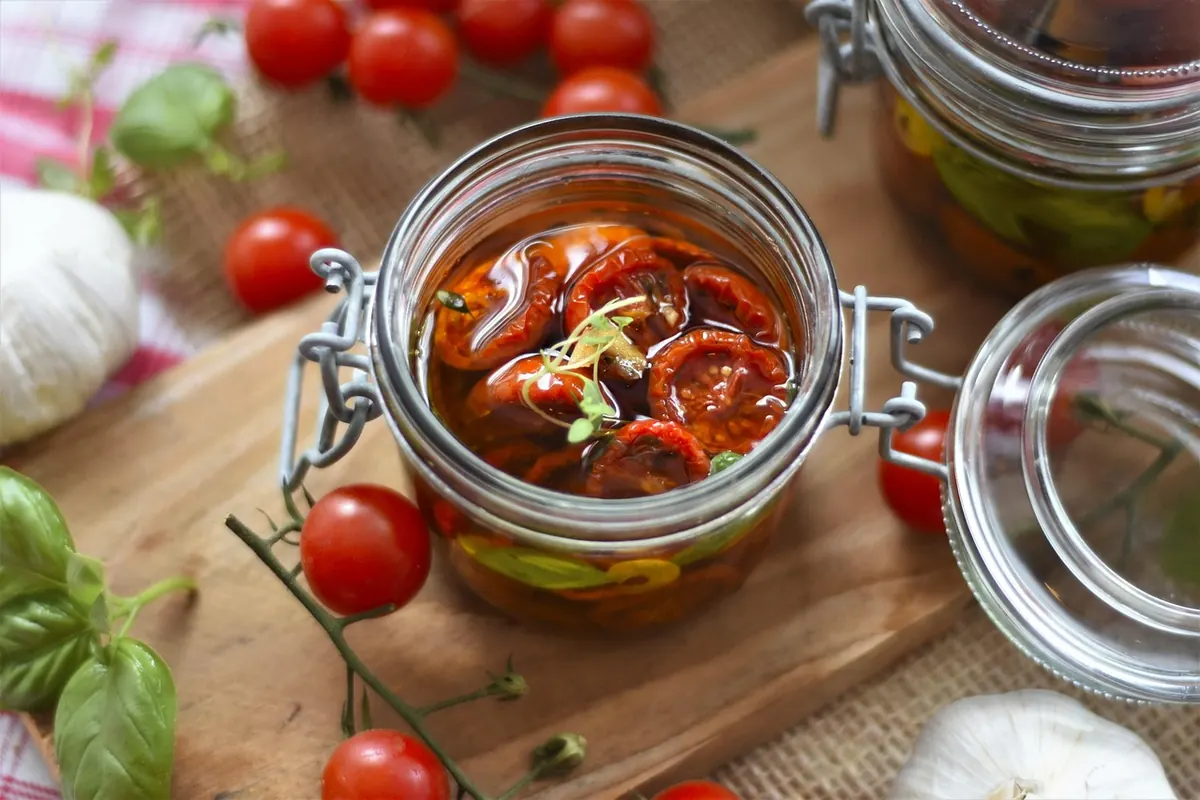
By mid-August, the kitchen counter has stopped being a surface and become a tomato storage facility. The plants are producing faster than anyone can eat, the neighbours have started avoiding eye contact, and somewhere in the back of your mind a small voice is asking what happens if you do nothing. The answer is fruit flies, then mould, then regret.
Three methods do most of the work of holding summer on a shelf: freezing, canning and drying. They are not interchangeable. Each one asks something different of your time, your cupboard space and your attention, and each produces a different ingredient in January. What follows is a working comparison, written from the position of someone who has filled a chest freezer, ruined a batch of jars, and burned a tray of cherry tomatoes into dark little coins.
The method matters less than what goes into it. Paste tomatoes, the meaty oblong sorts like Roma, San Marzano and Amish Paste, have dense flesh and few seeds. They are the best candidates for canning and drying because you are not paying to process water. Slicers and beefsteaks are juicy and wonderful on bread, but a tray of them takes forever to dry and yields a thin sauce unless you cook them down first. Cherry tomatoes are their own category: sweet, high in sugar, and superb halved and dried, or frozen whole for roasting later.
Pick at peak ripeness, free of bruises and splits. Slightly firm tomatoes hold their shape better in a canning jar; the soft, fragrant, almost-too-ripe ones are ideal for sauce or the freezer. Wash them, pull the stems, and keep them out of the fridge before preserving. Cold dulls the flavour and makes the flesh mealy.
Freezing asks for almost nothing: a tray, a bag, and room in the freezer. Wash and core the tomatoes, set them on a sheet pan so they are not touching, and freeze until solid. Then tip them into a freezer bag, press out the air, and label with the date and the amount. Whole frozen tomatoes are easy to slip out of their skins under warm water once thawed, which saves the blanching step entirely.
If you want neat peeled tomatoes for a specific dish, blanch for thirty seconds in boiling water, slip the skins, and freeze in their own juice. Either way, freeze in portions you will actually use: two cups, or enough for one pot of soup. A solid block of twelve tomatoes is a nuisance when a recipe calls for three.
Expect texture to change. Frozen tomatoes collapse when thawed, which is fine for sauce, soup, stew, chili and shakshuka, and hopeless for a salad. Use them within about eight to twelve months for the best flavour, and squeeze the air out of bags to keep freezer burn away. If the power goes out for a long stretch in a heat wave, that is the one real risk of this method.
Canning gives you jars that sit in a cupboard without electricity and open with a satisfying pop. It also demands the most equipment: a water bath canner or pressure canner, jars, new lids, a jar lifter, a wide funnel and a ladle. A Saturday disappears quickly.
Tomatoes sit awkwardly on the acid line, so tested recipes call for added lemon juice or citric acid in each jar. Follow those quantities exactly. Water bath canning suits tomatoes with added acid; anything with peppers, onions, garlic or oil in quantity needs a pressure canner and a tested recipe. Do not improvise ratios or invent a salsa from memory. Your local cooperative extension service and the National Center for Home Food Preservation publish recipes that have been checked, and they are free.
The basic flow for a hot-packed crushed tomato goes like this:
Any jar that fails to seal goes in the fridge and gets used first. Anything that smells wrong, fizzes or grows mould should be discarded without tasting. Done properly, canned tomatoes hold good quality for about a year and remain safe well beyond that, though flavour fades. Best uses are whole peeled tomatoes, crushed tomatoes, passata and sauce.
Drying takes the most space out of the final product and puts the most flavour into it. A dehydrator is the reliable tool; an oven on its lowest setting, door propped open with a wooden spoon, works but takes many hours and a lot of energy. Sun drying needs steady hot, dry weather and screens, and is a gamble in a humid climate.
Halve or slice tomatoes six to eight millimetres thick, salt lightly if you like, and arrange them cut side up without crowding. Dry until leathery and pliable rather than brittle, which can take eight to twelve hours depending on thickness and equipment. Let them cool, then condition them in a sealed jar for a week, shaking daily. If condensation appears, they need more drying.
Store dried tomatoes in an airtight jar in a cool, dark cupboard for six to twelve months, or freeze them for longer keeping. Tomatoes packed in oil are a different matter: keep those refrigerated and use them within a week or so. They are not a shelf-stable pantry item.
The trade-offs become clearer when you line them up against the questions that actually matter in a home kitchen.
Ask three questions. How many tomatoes are in front of you, what do you actually cook in winter, and where is your empty space? A freezer with room and a busy week points to freezing. A cupboard and a free Saturday point to canning, provided you have a tested recipe and the right jars. A glut of cherry tomatoes and a dehydrator in the garage points to drying.
Most experienced cooks mix the three rather than choosing one. Halve and dry the cherries, can a batch of sauce, freeze the rest in two-cup portions. If you are new to preserving, run a small test batch first: freeze a few bags in July, cook one in October, and see whether the result suits you. Whatever you do, label everything. A jar of unidentified red matter in February is a small tragedy, and it is entirely avoidable.
Photo: RitaE / Pixabay