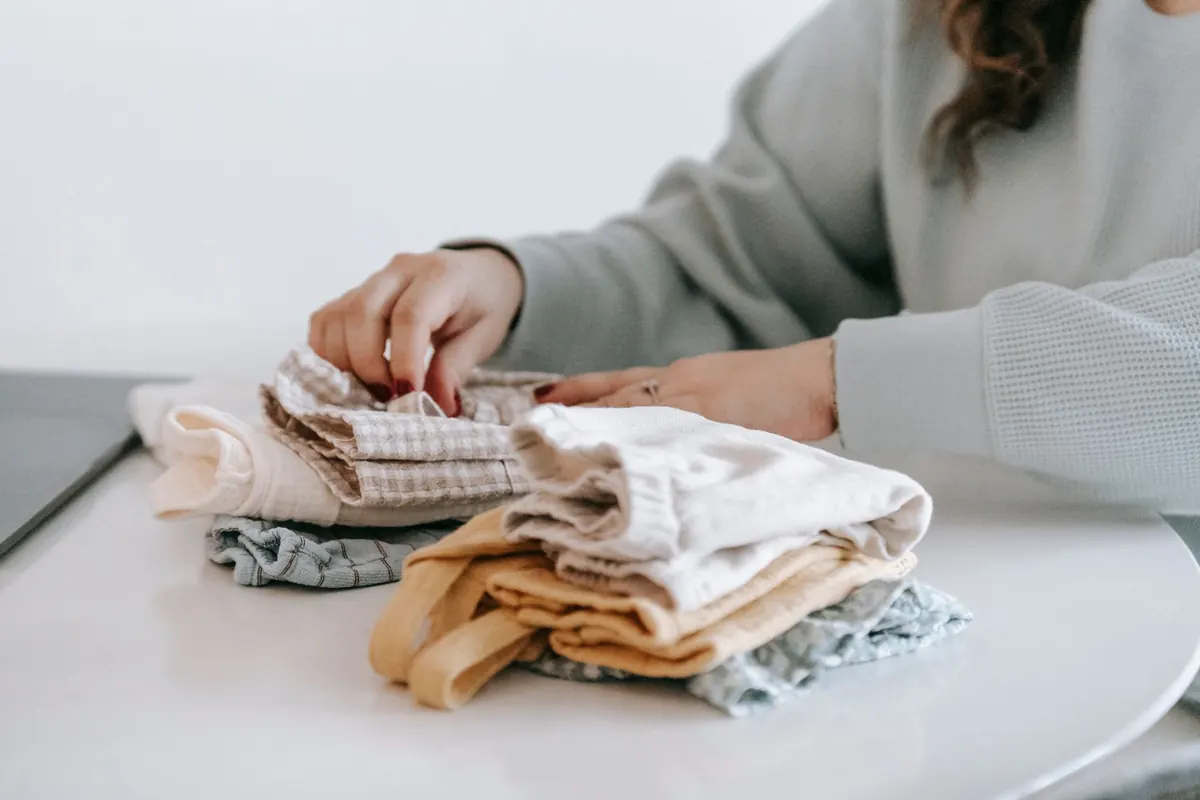
Twice a year the same scene plays out in bedrooms everywhere: a mound of sweaters on the duvet, a bin of sandals by the door, and the vague feeling that this ought to be simpler than it is. Switching a wardrobe between seasons isn't difficult because we own too much, although that rarely helps. It's difficult because most of us were never taught how to put clothes away. We fold, we stack, we shove the bin onto a shelf — and then wonder, six months later, why the wool smells faintly of the attic and the white shirt has a yellow line across the collar.
The good news is that nearly every problem in seasonal storage comes from a handful of repeatable mistakes. Fix them once and the ritual gets shorter, cheaper, and considerably kinder to your clothes.
A sweater worn once over a shirt feels clean. It usually isn't. Collars and cuffs collect skin oils, deodorant residue and tiny amounts of food spatter that you can't see and won't smell until August. Left for months in a closed box, those residues oxidise. Whites turn ivory, then yellow. Colours dull along the seams. And the proteins in sweat and food make wool and silk far more attractive to clothes moths, which are looking for exactly that kind of nourishment.
Before anything goes into storage, do a proper check rather than a quick sniff: look at the underarms, the inside of the collar, the cuffs, and the hem where it brushes against your body. If there's any doubt, wash it. A single delicate cycle now costs far less than a ruined jumper in autumn. Two related habits are worth adopting:
The instinct is to seal everything as tightly as possible. In practice, sealed plastic plus a damp basement is a recipe for mustiness, and sealed plastic in a hot attic is a recipe for yellowing and glue that fails. Fabrics need to breathe, especially natural fibres that absorb and release moisture with the air around them.
Use breathable cotton or canvas bags for wool and knitwear, and rigid boxes with a little ventilation for folded stacks. Vacuum bags are fine for bedding and out-of-season cotton, but think twice about down jackets and anything with loft: compressing them for months can flatten the fill and leave creases that never quite relax. Where you store matters as much as what you store in. A cool, dark, dry cupboard beats a shed, a garage or a loft with wild temperature swings every time.
There's a mirror-image error to mistake one: laundering the entire wardrobe before it goes away. Every wash cycle wears fibres, softens colour and encourages pilling. Wool in particular doesn't need washing after each wear; hanging it for a day in fresh air often does more good than a trip through the machine.
When you do wash, match the method to the fibre. Knits go on a cold wool cycle or get hand-washed, then dry flat on a towel — hanging a wet jumper is how shoulders end up pointed. Skip fabric softener and dryer sheets on wool, towelling and technical outdoor fabrics; the coating they leave behind reduces absorbency and can flatten the loft of fleece. And resist the urge to tumble-dry anything you're about to pack away. Residual dampness in a folded stack is exactly how mildew gets started.
Transition weather rarely respects the date. A morning that needs a coat turns into an afternoon that doesn't, and the usual response is one heavy layer that you carry around by noon. Better to build from thin pieces you can shed: a base layer, a light middle layer, a shell or jacket on top.
The base layer is where most people go wrong. Cotton next to the skin feels pleasant when you leave the house and clammy an hour later, because it holds moisture rather than moving it away. A merino or synthetic base does the opposite. Pay attention to fit as well: layers that are too tight bunch at the shoulders and restrict movement, while genuinely loose ones let cold air circulate. A close-fitting but not compressive middle layer traps warmth far more effectively than a bulky one. And keep a couple of genuinely warm pieces within reach into spring — a cold snap in April is not a wardrobe emergency if the merino is still in the drawer.
Most of us move the same unloved garments from one side of the closet to the other, year after year. Seasonal switching is the natural moment to assess, because you're handling every item anyway. If something went unworn all winter, it is unlikely to be worn next winter — but you don't have to decide that today.
Try a short, honest triage: a keep pile, a repair pile, a give-away bag, and a "maybe" box with a date written on it. If the date passes and you haven't opened the box, you have your answer. This is also the moment for small maintenance that gets postponed forever — reattaching a button, replacing a zip pull, sewing a dropped hem. Those fifteen minutes make the difference between a coat you reach for and a coat you resent. Label the bins by content and season, and keep a small transitional capsule accessible: a light jacket, a couple of long-sleeve shirts, one pair of boots, one pair of sandals. Weather whiplash is much easier to handle when you don't have to unpack a whole box to meet it.
Cedar blocks and lavender sachets smell lovely and do very little to kill moth larvae; cedar needs sanding to refresh its oils, and lavender fades within a season. Neither is a substitute for cleanliness, a vacuumed cupboard, and containers that close properly. Hanging garments should have room to breathe — crammed rails crease shoulders and hide the damage until it's done. Heavy knits should be folded, not hung, and anything structured benefits from a little acid-free tissue at the fold lines.
Then set a reminder to open the bins once, mid-season. It takes two minutes to check for damp patches, insect activity or creases, and catching any of those early is the difference between a repair and a replacement.
None of this requires a spare weekend. Wash what touches your skin, air what doesn't, choose breathable containers, and put them somewhere dry with steady temperatures. Keep one light jacket and one warm layer out of storage in both directions. Then edit as you go, and let the maybe box make the hard decisions for you. Do it this way once and the next switch will take an afternoon rather than two days — and your clothes will last noticeably longer for it.
Photo: Sarah Chai / Pexels